
Water around a water heater is one of the most common calls we get, and the first question is always the same: where is it actually coming from? Water travels along pipes and collects wherever the floor dips, so the puddle is often nowhere near the source. It might be the temperature and pressure relief valve or its discharge line, the drain valve near the bottom of the tank, the inlet and outlet fittings on top, condensation on a cold tank, or a nearby pipe that has nothing to do with the heater. It might also be the tank itself, and that answer changes everything. In Franklin, TN, we start every leak call by finding the true source.
We treat every leak like a small investigation. The technician dries everything off so fresh water shows where it starts, then checks the relief valve and its discharge line, the drain valve at the base, and every connection on top. On gas models we also inspect the burner compartment, because water there can be normal startup condensation or a sign of a tank that has failed. A relief valve that keeps releasing water means we also test pressure: static pressure above roughly 80 psi, or a missing expansion tank on a closed system, will keep a new valve weeping. The fix follows the findings.
Most leaks are handled the same day we find them. We replace worn relief valves, swap plastic drain valves for durable brass ones, rebuild corroded connections, add or recharge an expansion tank, and install a pressure-reducing valve when street pressure runs high. If the tank itself is leaking, there is no safe patch, and you will hear that from us directly along with your replacement options. We also help prevent the next leak from doing damage: a drain pan piped to a proper drain, a water sensor or automatic shutoff valve, and a clear label on the shutoff. For water heater leak repair in Franklin, call (615) 237-6853.
What homeowners call us about most is Water Heater Repair in Franklin and Water Heater Replacement in Franklin. Start there if you're not sure what you need.
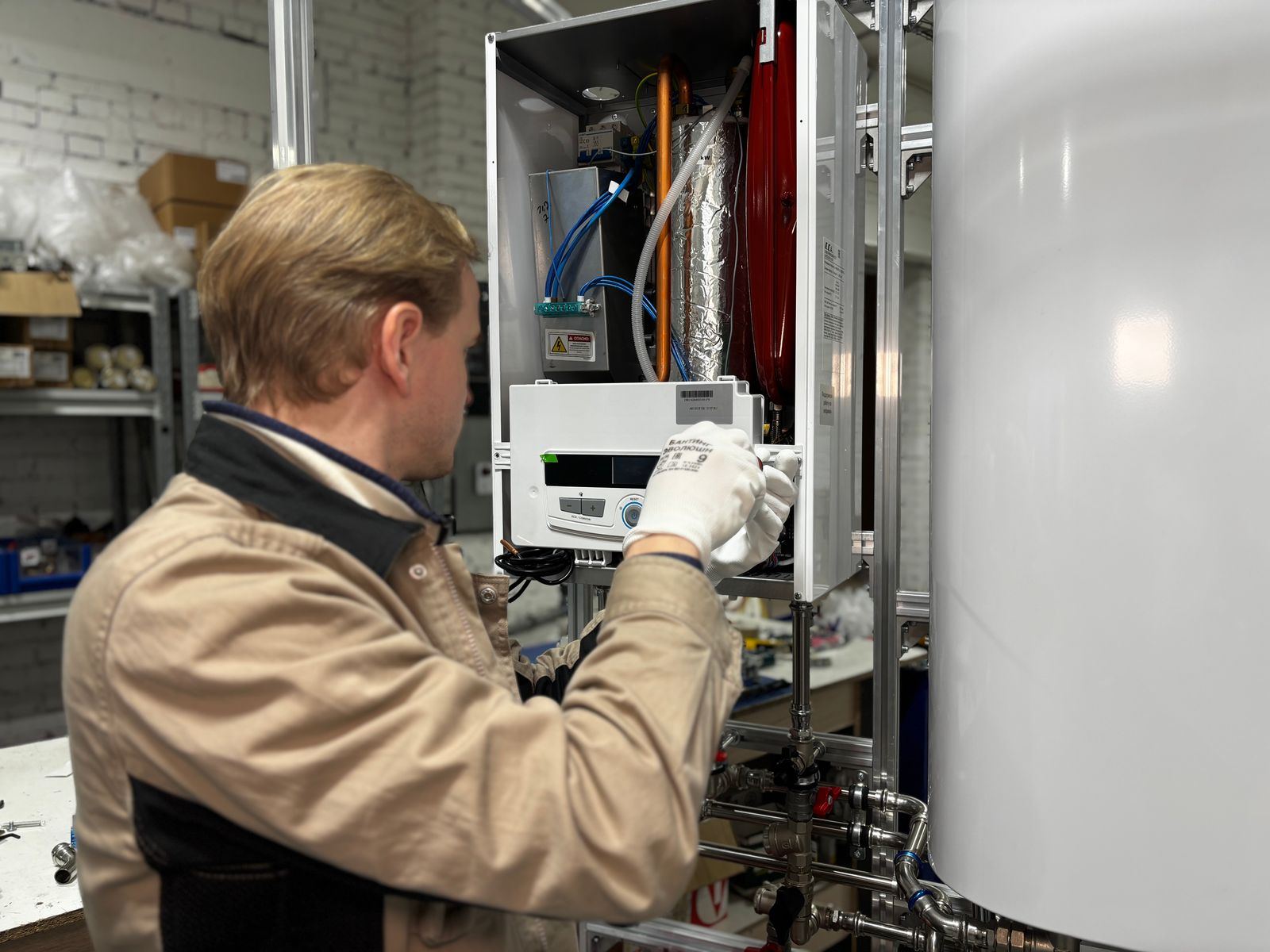
How to Tell Something Is Wrong
A heater that is starting to struggle rarely hides it for long, and the clues are easy to spot once you know them. Here are the most common indicators that it's time to call a professional:
- Rust-tinted hot water and signs of seepage near the base
- Mineral buildup or rust around the hot and cold connections
- The water meter moving when nothing in the house is running
- Water inside the burner compartment of a gas heater
- Water dripping from the relief valve or out of the end of its discharge pipe
- Water collecting under or beside the heater
- Warped baseboards or stained drywall beside the water heater
- A weeping drain spigot on the lower front of the heater
Act Before It Gets Worse
Tanks rarely fail all at once. They corrode from the inside for months, and the warning signs show up long before the floor gets wet. A quick call to (615) 237-6853 gets a technician out to check it before it becomes an emergency.
Need Help With Water Heater Leak Repair?
We'll diagnose the problem and give you a straight answer on the fix.
Call (615) 237-6853 NowYour Water Heater Leak Repair Questions Answered
Why This Job Calls for a Pro
Most leak mistakes happen before any tool comes out. Water travels along pipes and the outer jacket before it drips, so the puddle rarely marks the source, and harmless condensation on a gas unit or a cold tank can pass for a leak. Guessing leads to replacing the wrong valve or, worse, missing a tank that is on its way out. Safety matters here too: a relief valve that is discharging is protecting the tank, and plugging it is dangerous. Brittle old fittings can snap under force, and water around a 240-volt electric heater is a real shock hazard.
We work through leaks step by step and fix the cause along with the drip. We dry the unit, watch for fresh water, put a gauge on the system whenever the relief valve is involved, and check for thermal expansion problems that make valves weep. We replace valves and fittings with quality parts, swap plastic drain valves for brass, and add an expansion tank or pressure-reducing valve when pressure is the root problem. When the tank is the problem, we say so directly and explain replacement options, including the drain pan and leak protection that can keep the next failure from turning into water damage.
Our Water Heater Leak Repair Process
We follow the same careful process on every water heater, whether it's a quick thermostat swap or a full tankless conversion. Here's the short version:
Stop & Protect
We help you close the cold supply and shut off gas or power, then protect nearby flooring and belongings so the damage stops spreading.
Find Where It Starts
We dry the tank and fittings, then check the relief valve and discharge pipe, the drain valve, the top connections, and the burner area one at a time.
Measure What Caused It
We gauge household water pressure and look at expansion control, because a closed system without room to expand spikes pressure every heating cycle.
Repair, Refill & Verify
Repairs are tested, not assumed. We restore water and heat, check each joint, and suggest a drain pan or leak sensor where it would help. If the tank has failed, you get straight replacement options.
Repair or Replace? Let's Figure It Out.
Call Franklin Water Heater to talk through your situation with an experienced technician.
Get Help: (615) 237-6853Water Heater Care Tips From Our Technicians
A little routine care goes a long way toward keeping a water heater running well past its expected lifespan. Follow these tips from our technicians:
- A battery leak alarm beside the heater costs little and can catch a problem days sooner
- A properly drained pan under the tank catches small leaks before they reach your floors
- Replace a depleted anode rod before the steel tank becomes the next target for corrosion
- An expansion tank that is present and properly charged keeps the relief valve from opening every cycle
- A quick monthly look at the base, valves, and top connections catches leaks early
- Check your water pressure; if it runs above about 80 psi, a pressure-reducing valve protects the tank and valves
- Draining sediment every year helps the bottom of the tank last longer
Should You DIY or Call a Pro?
Online videos may help in a pinch, yet lasting repairs and code-compliant installs depend on correct venting, proper relief valve discharge piping, and a trained technician. Here's how the two approaches stack up:
| Factor | Doing It Yourself | Hiring a Pro |
|---|---|---|
| Finding the Source | Guess based on where water collects | Leak traced to its true starting point |
| Relief Valve | Valve swapped without checking why | Root cause fixed so the new valve stays dry |
| Old Fittings | Forced loose and damaged further | Corroded connections replaced with new fittings |
| False Alarms | Condensation mistaken for tank failure | False leaks ruled out with testing |
| Protecting the Home | Floors left exposed to the next leak | Drain pan, drain line, and leak sensor options |
| Result | Temporary fix that may fail again | Lasting fix, verified under pressure |
Book a Visit Today
Every day a leak or a failing part goes unchecked puts more stress on the tank. Get Franklin Water Heater on the job today.
Get Help: (615) 237-6853Water Heater Leak Repair Near Franklin
We serve Franklin and its neighboring towns for water heater leak repair, from quick same-day repairs to planned installs.